Every business has a story. But how does that story reach the people who need to hear it?
For many businesses, the first step is visual: a logo, a colour palette, a website, or a social media post. These elements matter, but they are only part of a much bigger picture.
A strong brand identity brings everything together. It helps people recognise your business, understand what makes it different, and develop confidence in what you offer.
Whether you are launching a startup, growing a small business, or refreshing an established company, investing in thoughtful brand identity design can help you create a more consistent and memorable presence.
In this guide, we explore what brand identity really means, why it matters, and how to build one that supports your business goals.
What Is Brand Identity Design?
Brand identity design is the process of creating the visual and verbal elements that represent a business.
It goes beyond designing a logo. It establishes how your business looks, communicates, and presents itself across different customer touchpoints.
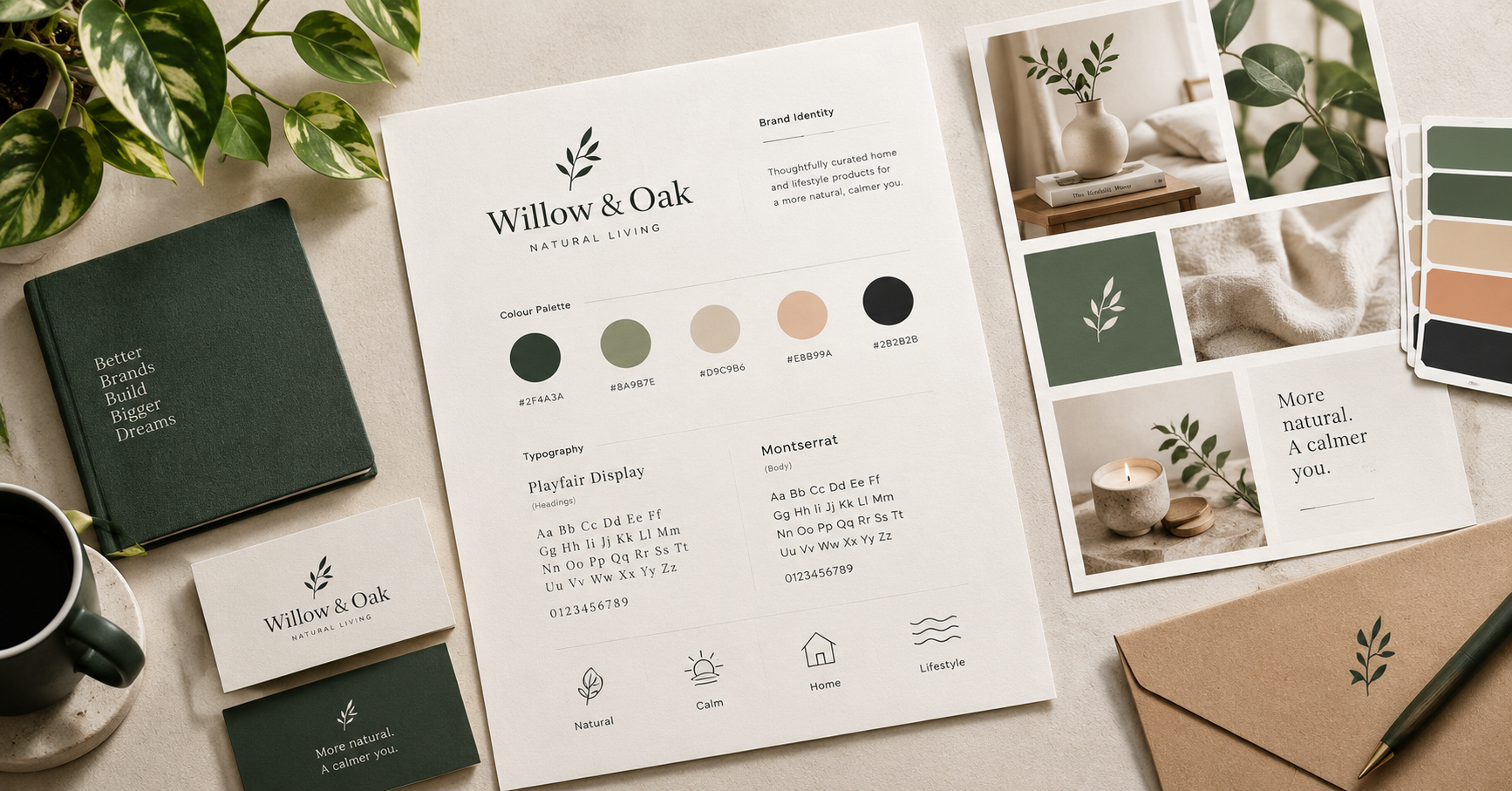
A complete brand identity may include:
Logo design: A recognisable visual mark that represents your business.
Colour palette: A considered set of colours used consistently across your brand.
Typography: Fonts that support your brand's personality and improve readability.
Brand guidelines: Rules that help maintain consistency across marketing materials.
Graphic elements: Patterns, illustrations, icons, and supporting visual assets.
Brand messaging: The language, tone, and key messages that communicate your value.
Packaging and collateral: Business cards, brochures, product packaging, and other branded materials.
Digital identity: A consistent visual experience across your website, social media, and digital campaigns.
When these elements work together, your business becomes easier to recognise and more coherent across every interaction.
Why Is Brand Identity Important for Small Businesses?
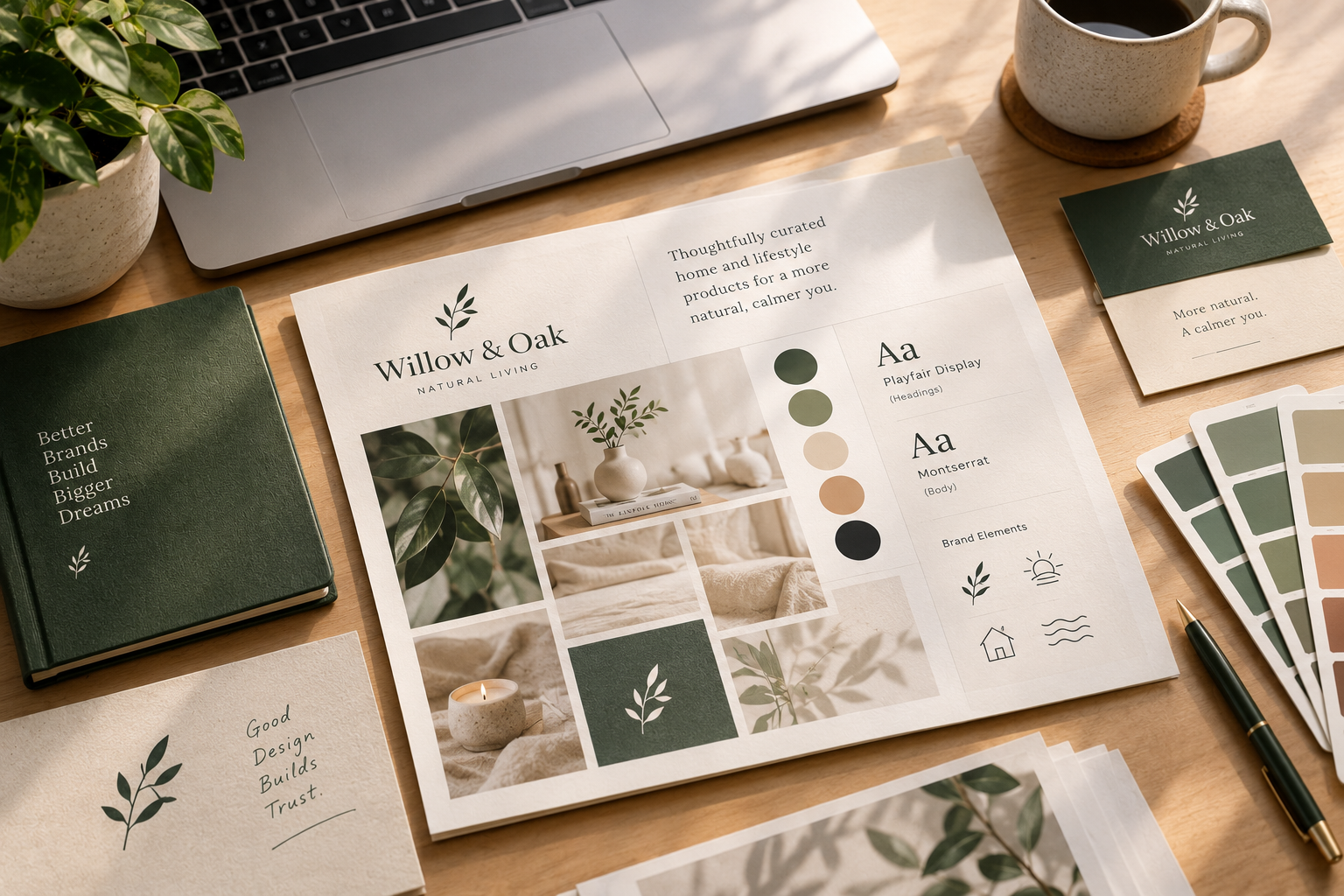
Small businesses often compete with established companies that already have recognition and customer trust. A clear brand identity can help communicate professionalism and give potential customers a reason to pay attention.
1. It helps your business stand out
Your customers have many options. If your business looks and sounds similar to every competitor, it becomes harder to communicate what makes you different.
Effective brand identity design begins with understanding your audience, your market, and your unique value. These insights help guide the visual direction and messaging so your brand has a distinct point of view.
The goal is not simply to look different. It is to look relevant to the people you want to reach.
2. It builds recognition and familiarity
Consistency helps people connect the different places they encounter your business.
Imagine seeing the same visual style on a company's website, Instagram profile, packaging, and brochure. Over time, those consistent elements can make the business easier to recognise.
A practical brand identity system makes this consistency easier to maintain, even as your business grows and creates new marketing materials.
3. It communicates professionalism
Customers often form impressions before speaking to a business or trying its products.
An outdated website, inconsistent graphics, or an unclear visual identity can make it difficult for customers to understand what to expect. A thoughtful and well-executed brand identity helps present your business in a clear, considered way.
Good design cannot replace product quality or excellent service, but it can help communicate the care behind them.
4. It creates a stronger customer experience
Your brand is experienced through many interactions, not just one visual element.
From the first advertisement to the website visit, enquiry, purchase, and follow-up, each interaction contributes to how customers perceive your business.
When the experience feels connected, your brand becomes easier to understand and engage with.
5. It supports long-term business growth
As your business expands, you may introduce new products, services, marketing channels, or customer segments.
A flexible brand identity system provides a foundation for that growth. Instead of reinventing your visual style for every new project, you can build on an established direction.
This makes it easier to maintain consistency while allowing your business to evolve.
What Makes a Strong Brand Identity?
A successful brand identity is not determined by how fashionable or elaborate it looks. It depends on how well it communicates the business's purpose and connects with its audience.
Here are five essential characteristics to consider.
Clear positioning
Before choosing colours or designing a logo, understand what your business stands for.
Ask yourself:
Who are your ideal customers?
What problem do you solve for them?
What makes your business different?
What should people remember about your brand?
Clear answers create a stronger foundation for design decisions.
A distinctive visual direction
Your visual identity should reflect your brand's personality while remaining appropriate for your industry and audience.
A premium skincare brand, for example, may need a different visual approach from a playful children's brand or a technology startup.
The design should communicate the right qualities rather than follow trends without purpose.
Consistent application
A brand identity should work across different sizes, formats, and platforms.
Your logo should remain legible in relevant applications, colours should be used consistently, and typography should support readability.
Brand guidelines help make these decisions repeatable.
Flexibility
Your identity should work for today's needs and accommodate future opportunities.
Consider how the design will translate to a website, mobile screen, packaging, social media post, presentation, or printed material.
A flexible system makes it easier to create new assets without losing recognition.
Authenticity
Your brand should reflect the actual experience customers can expect from your business.
Avoid making promises through your messaging or visual presentation that your business cannot support. A credible identity aligns what you communicate with what you deliver.
Brand Identity vs Logo Design: What's the Difference?
These terms are related, but they are not interchangeable.
Logo design focuses on creating a visual mark for your business.
Brand identity design creates a broader system of visual and communication elements that work together.
A logo is one important component of that system, but it cannot independently establish your positioning, messaging, visual consistency, or customer experience.
For example, a logo may look excellent on a business card. Without a supporting colour palette, typography system, imagery direction, and usage guidelines, however, the rest of the brand may look inconsistent.
If your business needs a stronger and more recognisable presence, consider the complete identity rather than evaluating the logo in isolation.
How to Build a Brand Identity Step by Step
Creating a brand identity becomes more effective when the process begins with strategy and moves towards execution.
Step 1: Understand the business
Start by identifying your business objectives, audience, strengths, and competitive landscape.
Gather information about your products or services, existing customer perceptions, and future plans.
This discovery stage helps ensure that design decisions support business needs rather than personal preferences alone.
Step 2: Define your brand positioning
Clarify what your business offers, whom it serves, and why customers should consider it.
Develop a positioning statement and identify the main messages you want customers to remember.
This becomes the foundation for your brand's tone and visual direction.
Step 3: Develop the visual identity
Explore suitable concepts for the logo, colour palette, typography, imagery, and supporting graphic elements.
Evaluate the options against your audience, positioning, and practical requirements.
The strongest direction is one that communicates the right message and works in real-world applications.
Step 4: Create brand guidelines
Document how the identity should be used.
Your guidelines might cover logo variations, spacing, colours, typography, imagery, and examples of consistent application.
This helps internal teams, designers, and marketing partners work from the same foundation.
Step 5: Apply the identity across touchpoints
Bring the identity to life through your website, social media, packaging, presentations, marketing campaigns, and other relevant materials.
Prioritise the touchpoints your customers use most frequently.
Step 6: Review and refine
Once the identity is in use, gather feedback and observe how customers respond.
Look for inconsistencies, unclear messaging, or practical issues. Refine the system when there is a genuine business reason to do so.
A strong identity is built to remain useful, not to remain unchanged forever.
Common Branding Mistakes to Avoid
Even well-intentioned businesses can make choices that weaken their brand identity.
Designing without a strategy. Choosing colours and logos before understanding your audience can lead to an identity that looks attractive but communicates little.
Following every design trend. Trends can provide inspiration, but your identity should remain relevant to your positioning and customers.
Inconsistent visual communication. Using different fonts, colours, and design styles across platforms can make your brand harder to recognise.
Treating branding as a one-time logo project. Without supporting guidelines and consistent application, a logo alone may not solve broader branding challenges.
Ignoring the website experience. Your website should reinforce the identity through clear messaging, readable content, intuitive navigation, and a consistent visual language.
Failing to measure business outcomes. Branding should be evaluated against relevant goals, such as recognition, customer understanding, enquiry quality, or conversion performance, rather than appearance alone.
When Should You Invest in Professional Brand Identity Design?
Professional branding may be particularly valuable when:
You are launching a new business or product.
Your current identity no longer reflects your business.
Your company is expanding into new markets.
Your marketing materials look inconsistent.
Customers struggle to understand what differentiates your business.
You are redesigning your website and need a coherent visual direction.
Your business has evolved, but your branding has not kept pace.
You do not necessarily need to change everything at once. A focused review can help identify the most important gaps and determine what to prioritise.
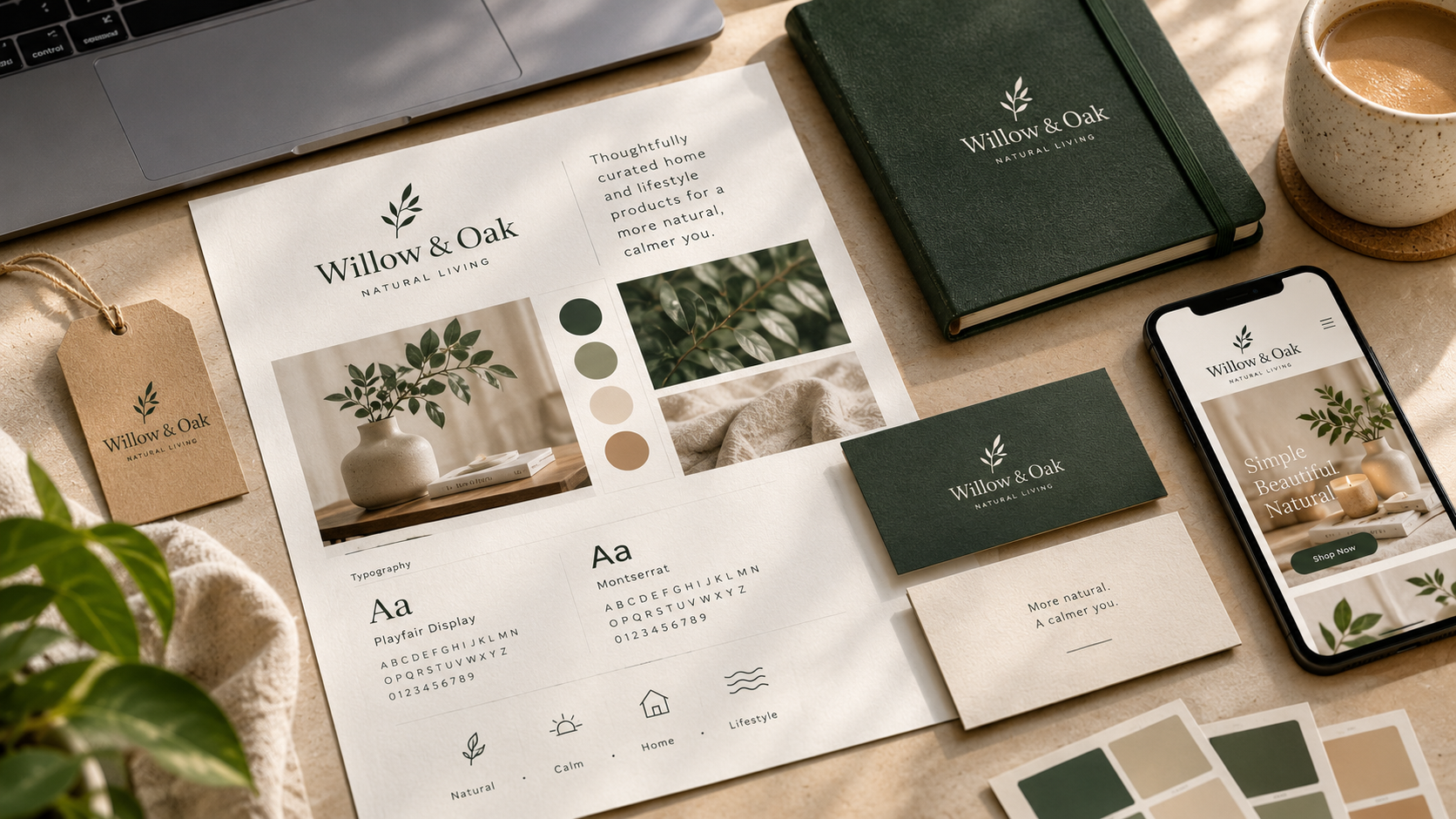
How Brand Identity and Website Design Work Together
Your brand identity establishes how your business should look and communicate. Your website turns that identity into an interactive customer experience.
When the two are aligned, visitors can understand what you offer, why it matters, and what to do next.
A well-designed business website should combine:
Consistent branding and visual hierarchy.
Clear service descriptions and messaging.
Responsive layouts for mobile and desktop.
Intuitive navigation and accessible content.
Relevant calls to action.
Search engine optimisation foundations.
Performance and usability considerations.
This is why branding and web design are often most effective when approached together.
Explore Two Pencils Design Studio's services to learn more about its design and digital growth offerings.
Frequently Asked Questions
How much does brand identity design cost?
The cost depends on the scope of work, research requirements, number of deliverables, and complexity of the project. A basic identity and a comprehensive brand system require different levels of effort. Ask for a clearly defined scope and deliverables before starting.
How long does it take to create a brand identity?
The timeline depends on the project. Research, concept development, revisions, and brand guidelines all influence the schedule. Agreeing on the scope and feedback process early can help keep the project organised.
Can a small business benefit from professional branding?
Yes. A small business can benefit from a clear identity that communicates its value and maintains consistency across customer touchpoints. The right scope depends on its needs, budget, and growth plans.
Is brand identity the same as brand strategy?
No. Brand strategy establishes the business's positioning, audience, differentiation, and messaging direction. Brand identity translates that direction into recognisable visual and communication elements. They work best when aligned.
Should I redesign my logo or my entire brand identity?
That depends on the problem. If your logo has a specific technical or application issue, a focused improvement may be sufficient. If your positioning, audience, visual language, and business goals have changed, a broader identity review may be more appropriate.
Does branding help with SEO?
Branding does not automatically improve search rankings. However, a clear brand and consistent website experience can support user trust and make your business easier to understand. SEO still requires relevant content, crawlable pages, appropriate technical implementation, and other quality signals.
Build a Brand That Reflects Your Business
Your business deserves an identity that does more than look good. It should communicate what you stand for, help customers understand your value, and provide a consistent foundation for future growth.
At Two Pencils Design Studio, we bring strategy and creative thinking together to shape brands and digital experiences with purpose.
Whether you are starting from scratch or ready to refresh an existing identity, the first step is understanding where your business wants to go.
Have a project in mind?
Explore our services or visit Two Pencils Design Studio to start a conversation about your brand.